
Notes from the AI Summit
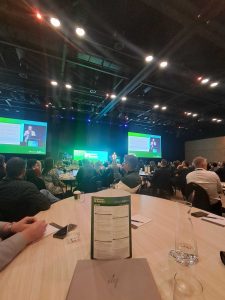
I spent two days at the Aotearoa AI Summit and came away with a fair bit that is relevant to businesses of the size and shape inside of EPIC. Here is what stood out, take what is useful.
Where New Zealand actually sits
The clearest thread across both days was that New Zealand is never going to compete on infrastructure. We are not building frontier models or hyperscale data centres, and pretending otherwise wastes time.
What was put forward instead is that our defensible position is applied AI. A country that uses this technology well, in real businesses, with trust attached to how it is done. That is a position built on practice rather than capital, which is a position we can genuinely hold.
The related point was about distance. Distance used to tax New Zealand businesses by keeping us physically away from export markets. Software and digital export already reduced that penalty considerably. AI reduces it further.
The other repeated observation was that we are too small a country to do this in silos. That one came up more than once and from more than one speaker.

On government and regulation
Worth being straight about this: do not plan around regulatory clarity arriving soon.
A political panel on the role of AI in Aotearoa drew a single MP. The gap between what AI is currently doing inside New Zealand businesses and what is understood at a policy level is wide, and it did not look like closing quickly.
The practical implication for anyone here is that if you are waiting for rules before you make decisions about AI in your business, you will be waiting a while. Build in a way that can adapt when policy does arrive.
The most useful things I heard for actually adopting this stuff
Adoption without value creation is meaningless. The best line of the two days. Using AI is not an achievement in itself.
Measure benefit, not usage. Several speakers made versions of this point. Token spend, seat licences and credit consumption are inputs. They tell you nothing about whether anything improved. The question is what changed in the business.
Start by asking what disrupts people’s flow. The workforce transformation session made a good case that adoption goes better when you begin with the small friction people already feel in their day, rather than leading with the technology and looking for somewhere to put it.
Find one place where it is genuinely valuable to you, and start there. Broad rollouts before you have one proven use tend to go badly.
Do not automate a bad process. If the process underneath is poor, AI makes it fast and poor. Fix the process first. This came up repeatedly in the financial services discussion and applies well beyond it.
Model choice is a workload decision. Different models suit different tasks, and standardising on one provider out of habit is a decision worth revisiting rather than a default.
Run thirty day pilots. Try something for thirty days with a clear idea of what success looks like. Invest if it works. Stop it if it does not. It keeps experiments from becoming permanent by accident.
On people and hiring
This was the part I found most interesting and the least resolved.
Junior staff have traditionally learned their trade by doing the routine work. AI is absorbing a lot of that routine work. Nobody in the room had a good answer to how the next generation now learns, and every senior person recognised the problem.
What was agreed is that this has to be dealt with deliberately at a leadership level, through hiring, mentorship and progression planning, because it will not solve itself.
Two related points:
Critical thinking is now the thing to hire for. Someone has to judge whether what the model produced is right and feed that judgment back in. That skill is now more valuable than the tasks being automated.
Leadership needs to be clear about the vision. People do not get motivated by a tool. They get motivated by knowing what it is for. If AI is being introduced without a stated purpose, expect resistance.
If you want to talk about any of it
I’m always happy to have a coffee and chat about AI or ways of working in the future. Feel free to reach out.
Henry Cadillac